IPL for Pigmentation vs Facial Redness: What Can Each Treatment Actually Address?
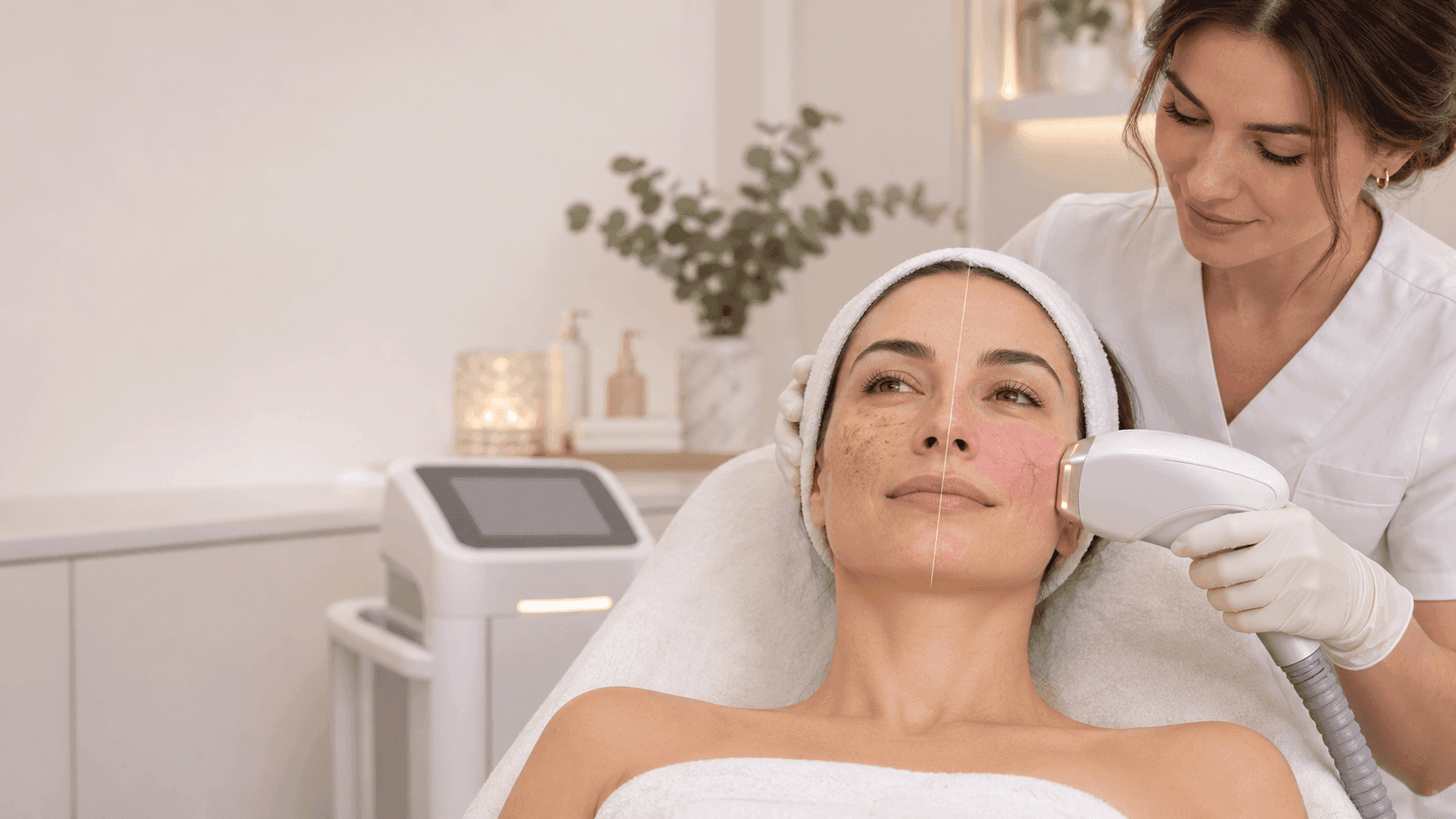
You might notice a few new brown spots across your cheeks after summer. Or perhaps your face seems to stay red long after you've finished exercising, even when the rest of your skin feels perfectly normal.
Maybe you've also noticed that some of the marks left behind by old pimples are brown, while others look pink or red.
They can all make your complexion appear uneven, but here's something worth understanding: not every type of discolouration has the same cause, and not every treatment works on every type of mark.
If you've been researching IPL Skin Rejuvenation in Canberra, you've probably seen it recommended for pigmentation, sun spots, redness and visible facial blood vessels.
That can make IPL sound like a solution for almost everything.
The reality is a little more nuanced.
Intense Pulsed Light (IPL) can be useful for certain superficial pigmented and vascular concerns. However, its effectiveness depends on what's creating the colour in your skin, how deeply that colour sits, and whether another skin condition is involved.
At Sycamore, IPL Skin Rejuvenation is offered using the Venus Versa platform, with treatment options designed around individual skin concerns.
In this guide, we'll explain how IPL works, the difference between pigmentation and facial redness, which concerns may respond well, and when a different treatment or medical assessment might be more appropriate.
Because choosing the right treatment starts with understanding what you're actually trying to address.
What Is IPL Skin Rejuvenation?
IPL stands for Intense Pulsed Light.
It's a non-invasive, light-based treatment commonly used to improve the appearance of selected pigmentation, visible blood vessels and other signs of sun-related skin changes.
Although people sometimes refer to IPL as a laser treatment, the two technologies aren't quite the same.
A laser typically delivers light within a narrow wavelength range, whereas IPL delivers a broader spectrum of light that can be filtered for different treatment purposes.
The light is absorbed by specific components within the skin, known as *chromophores*.
Two particularly important chromophores in skin rejuvenation are:
- Melanin: The pigment responsible for much of our skin, hair and eye colour.
- Haemoglobin: A component of blood that absorbs certain wavelengths of light.
By selecting appropriate treatment settings, IPL can direct light energy towards certain pigmented structures or superficial blood vessels.
That energy is converted into heat, creating a controlled effect in the targeted area.
The DermNet guide to Intense Pulsed Light therapy explains how this principle allows IPL to be used for selected pigmentation and vascular concerns.
However, the treatment needs to be carefully matched to your skin.
IPL isn't capable of identifying every cause of redness or discolouration automatically.
And because the surrounding skin also contains melanin, inappropriate treatment settings can lead to unwanted pigmentation changes, burns or other complications.
This is why a proper consultation matters.
Pigmentation vs Facial Redness: What's the Difference?
When people talk about uneven skin tone, they often group several different concerns together.
But brown spots, broken capillaries, post-acne marks and rosacea are not interchangeable.
Understanding the differences can help you ask better questions before booking.
A Quick Comparison
| Skin Concern | What Causes the Colour? | Can IPL Help? |
| -------- | -------- | -------- |
| Sun spots and freckles | Localised melanin pigmentation | Often worth considering after assessment |
| Superficial facial blood vessels | Dilated or visible blood vessels | May respond to appropriately selected IPL |
| General facial flushing | Temporary changes in blood vessel activity | Sometimes, depending on the underlying cause |
| Brown post-acne marks | Post-inflammatory hyperpigmentation | Not always first choice; risk of worsening pigment |
| Red post-acne marks | Post-inflammatory erythema | May respond to vascular treatment in selected cases |
| Melasma | Complex, often recurring pigmentation influenced by several factors | Requires caution; IPL can sometimes worsen it |
| Rosacea | Chronic inflammatory skin condition involving flushing, redness and sometimes bumps | IPL may help certain vascular signs but is not a cure |
| Suspicious or changing dark spots | Cause not yet established | Medical assessment required before cosmetic treatment |
The important takeaway is that IPL suitability depends on the underlying cause, not simply whether a mark looks brown or red.
Can IPL Treat Pigmentation and Sun Spots?
For suitable candidates, superficial pigmentation is one of the better-established applications of IPL photorejuvenation.
Perhaps you've noticed freckles becoming more visible after spending time outdoors.
Or maybe small brown patches have gradually developed across your cheeks, forehead or hands.
Some of these changes may be related to accumulated sun exposure.
How IPL Targets Pigmentation
When IPL is used for selected pigmented lesions, the light energy is absorbed by melanin.
The resulting heat affects the targeted pigment-containing structures, allowing the appearance of certain superficial spots to improve as the skin responds.
In some cases, treated spots may temporarily darken before gradually fading or shedding.
This doesn't happen in the same way for every client, and not every pigmented mark will respond.
Which Pigmented Concerns May Be Suitable?
IPL may be considered for selected:
- Sun spots, also known as solar lentigines
- Freckles
- Certain superficial brown discolourations
- Uneven-looking pigmentation associated with sun exposure
The suitability of each spot must be assessed first.
A small brown mark that appears harmless may not necessarily be a sun spot.
In Australia, where UV exposure contributes significantly to skin cancer risk, it's particularly important not to treat an unexplained or changing lesion as a purely cosmetic problem.
What About Deeper Pigmentation?
Not all pigmentation sits near the skin's surface.
Some forms extend deeper into the skin or involve several different biological processes.
These may respond differently to IPL, and some are better managed with other approaches.
This is especially relevant for melasma and post-inflammatory pigmentation.
Is IPL Suitable for Melasma?
Melasma often appears as patches of brown or grey-brown pigmentation, commonly across the cheeks, forehead or upper lip.
It can be influenced by sunlight, hormones, genetics and other factors.
Although melasma may resemble ordinary sun-related pigmentation, the underlying condition is more complex.
And that's why IPL needs to be approached cautiously.
Why Melasma Is Different From Ordinary Sun Spots
Melasma involves altered pigment production and can be persistent or recurring.
Heat, inflammation and light exposure can contribute to worsening pigmentation in susceptible individuals.
IPL uses light energy to produce heat in selected tissue.
While certain medical treatment plans may include light-based procedures, IPL is not automatically the most appropriate first option for melasma.
In some cases, it may aggravate pigmentation or contribute to post-inflammatory hyperpigmentation.
According to the American Academy of Dermatology's melasma treatment guidance, management generally focuses on consistent sun protection and appropriate topical treatments, with selected procedures considered under specialist supervision.
If you're unsure whether your pigmentation is melasma or ordinary sun damage, a dermatologist can help establish the diagnosis before any cosmetic light treatment is considered.
Can IPL Treat Facial Redness and Broken Capillaries?
Yes, certain vascular concerns may respond to IPL.
But first, it helps to understand why facial redness occurs.
Some redness is caused by superficial blood vessels becoming more visible.
Other redness results from active inflammation, irritation or a chronic skin condition.
These situations can look similar but require different approaches.
How IPL Targets Visible Blood Vessels
In vascular treatments, selected wavelengths of light are absorbed by haemoglobin within blood vessels.
The absorbed energy creates a controlled heating effect that can affect the targeted vessels.
Over time, this may reduce the appearance of certain superficial red vessels.
IPL is commonly considered for visible capillaries and selected areas of persistent vascular redness.
For example, some people notice small red lines around their nose or across their cheeks.
These are often described as broken capillaries, although they usually involve dilated or visible superficial vessels rather than blood vessels that have literally broken open.
Which Redness Concerns May Respond?
IPL may be worth discussing for:
- Selected superficial facial blood vessels
- Fine red capillaries around the nose
- Some forms of persistent vascular redness
- Certain vascular changes associated with sun exposure
However, larger or deeper vessels may require a different technology.
Vascular lasers, such as pulsed dye or other appropriately selected lasers, may be more suitable for particular vessel sizes, depths and skin types.
The DermNet guide to facial red vein treatments explains the range of light and laser technologies used for vascular concerns.
This is why a consultation should focus on the characteristics of your redness rather than treating every red area identically.
Can IPL Help With Rosacea?
This is where the distinction between cosmetic improvement and medical treatment becomes particularly important.
Rosacea is a chronic skin condition that may involve flushing, persistent redness, visible blood vessels, burning sensations and acne-like bumps.
Some people also experience eye symptoms.
It can vary considerably between individuals.
What IPL May Help With
For someone with diagnosed rosacea, IPL or another vascular light-based treatment may sometimes be included in a dermatologist-led management plan.
The treatment may help reduce certain visible blood vessels or aspects of persistent redness.
However, IPL doesn't cure rosacea.
It also doesn't necessarily address inflammatory bumps, skin sensitivity or the underlying tendency to experience flare-ups.
The American Academy of Dermatology's guidance on laser and light treatment for rosacea explains that light-based procedures may form part of a broader treatment plan involving skincare, medication and trigger management.
When Should You See a Dermatologist First?
If you frequently experience flushing, burning, stinging, persistent facial redness or unexplained acne-like bumps, it's sensible to seek medical assessment.
This is especially important if you're experiencing eye irritation, gritty sensations or changes in vision.
Rosacea can resemble other inflammatory skin conditions.
Booking a cosmetic facial or IPL appointment without understanding the cause may not address the actual problem.
For clients with medically managed rosacea, the treating healthcare professional should help determine whether a light-based procedure is appropriate.
What About Red and Brown Marks Left Behind by Acne?
Here's a common situation.
Your breakout has finally cleared, but the mark it left behind seems to stay for weeks or months.
Sometimes the mark is brown.
Other times it's pink or red.
They may look like acne scars, but many flat post-acne marks are not permanent scars.
The colour can provide a useful clue about the process involved.
Brown Marks: Post-Inflammatory Hyperpigmentation
Post-inflammatory hyperpigmentation, often shortened to PIH, occurs when inflammation triggers excess pigmentation in the affected area.
It commonly appears as brown, dark brown or greyish patches.
These marks can follow acne, eczema, irritation, injuries or other inflammatory skin problems.
PIH can occur in any skin tone but may be more noticeable or persistent in people with medium to darker skin.
IPL isn't automatically the best treatment.
If the pigmentation is deep or your skin is prone to developing dark marks after inflammation, additional light-based treatment may create a risk of further pigmentation.
Depending on the concern, a medical professional may recommend sun protection, appropriate topical products or another treatment strategy.
Red Marks: Post-Inflammatory Erythema
Post-inflammatory erythema, or PIE, describes lingering redness following inflammation.
These marks are often pink or red rather than brown.
They may be related to changes in superficial blood vessels after acne or other inflammation.
Because vascular light-based treatments target blood-related chromophores, selected cases of PIE may be considered for treatment.
However, not every red acne mark requires IPL.
Some gradually improve over time, and persistent active acne should be managed appropriately before focusing on the marks left behind.
What If You Have Both Red and Brown Marks?
This is quite common.
You may have several types of discolouration at the same time.
And a single treatment approach may not address them equally well.
For example, a practitioner might identify superficial vascular redness alongside deeper post-inflammatory pigmentation.
Treating everything with the same settings could produce disappointing results or unnecessary risk.
The priority is identifying each concern and deciding whether IPL, skincare, another technology or medical treatment is most appropriate.
When Might IPL Be the Wrong Treatment?
IPL can be useful, but knowing when not to use it is equally important.
1. Suspicious or Changing Pigmented Spots
A dark spot that changes shape, colour or size should be assessed medically before cosmetic treatment.
The same applies to lesions that bleed, itch persistently, ulcerate or look noticeably different from surrounding spots.
According to Cancer Council Australia's skin cancer guidance, changes in a spot's appearance can be warning signs requiring medical evaluation.
Never assume a changing dark spot is simply pigmentation that can be treated with IPL.
2. Active Skin Inflammation
If your skin is actively inflamed, infected, sunburned or significantly irritated, treatment may need to be postponed.
The priority should be understanding and addressing the underlying condition.
3. Recent Tanning or Significant Sun Exposure
Tanned skin contains increased melanin, which can affect how light energy is absorbed.
This may increase the risk of burns or pigmentation changes.
Sycamore recommends avoiding sun tanning, prolonged exposure and sunburn for at least four weeks before IPL treatment.
4. Certain Medications
Some medications increase sensitivity to light or influence how the skin responds to treatment.
Always disclose your current medications, including prescription acne treatments and antibiotics.
Do not stop prescribed medication without advice from your treating clinician.
5. Certain Skin Tones and Pigmentation Patterns
IPL can carry a higher risk of unwanted pigmentation changes in more heavily pigmented skin.
That doesn't mean everyone with darker skin is automatically unsuitable.
It means treatment requires particularly careful assessment of skin tone, tanning history, the device, settings and alternatives.
Sometimes a different technology or a non-device-based treatment is more appropriate.
6. Unrealistic Treatment Expectations
IPL won't permanently prevent freckles, stop all facial flushing or cure chronic inflammatory skin conditions.
It also cannot guarantee the complete removal of pigmentation or vessels.
Understanding what can realistically improve is an important part of deciding whether treatment is worth pursuing.
What Happens During IPL Skin Rejuvenation at Sycamore?
At Sycamore, IPL Skin Rejuvenation is offered using the Venus Versa platform.
The clinic's published information describes treatment sessions lasting approximately 15–30 minutes, with an integrated cooling system intended to improve comfort.
The exact appointment process depends on your treatment area and individual skin concerns.
Step 1: Consultation and Skin Assessment
Your practitioner should begin by discussing what you'd like to improve.
Are you mainly concerned about sun spots, visible capillaries or a generally uneven complexion?
Be specific.
You should also discuss your history of pigmentation, recent sun exposure, medications and previous aesthetic procedures.
If there is an unexplained or suspicious lesion, medical assessment should take priority.
Step 2: Preparing the Skin
The treatment area is typically cleansed.
Protective eyewear is used, and the practitioner prepares the device according to the selected treatment protocol.
Depending on the system and procedure, a cooling or coupling gel may be applied.
Step 3: Delivering IPL Energy
The handpiece delivers controlled pulses of light to selected areas.
You may feel brief warmth or a sensation similar to a rubber band snapping gently against the skin.
Some areas may feel more sensitive than others.
Although IPL is often described as comfortable, it isn't necessarily painless for everyone.
Tell your practitioner if the sensation becomes unusually painful.
Step 4: Aftercare and Follow-Up
Once treatment is complete, the skin is assessed.
You may experience temporary redness, warmth or mild swelling.
Your practitioner should explain what reactions are expected, how to care for your skin and when any further assessment or treatment may be appropriate.
What Results Can You Expect From IPL?
Results depend on what you're treating.
For selected pigmentation, treated spots may initially appear darker before gradually fading.
For visible superficial blood vessels, improvement may become noticeable as the treated area recovers.
However, neither response is guaranteed.
Can You See Results After One Session?
Some people notice visible changes after an initial appointment.
Others require several treatments.
The number of sessions depends on the extent of the concern, treatment area, skin characteristics and response.
A practitioner should explain the proposed schedule during consultation rather than assuming everyone needs the same course.
How Long Do Results Last?
Results can vary.
Sun-related pigmentation may return or new spots may develop with continued UV exposure.
Vascular redness can also recur, particularly when an underlying condition such as rosacea remains active.
Long-term sun protection and appropriate skin management can help support results, but they cannot prevent every future change.
Does IPL Have Downtime?
Sycamore describes IPL as a treatment with minimal downtime.
However, temporary redness, warmth, dryness or swelling may occur.
Some pigmented areas may darken or develop temporary crusting.
Less common complications include burns, blistering, unwanted lightening or darkening of the skin, and scarring.
If you have an important event approaching, discuss the timing carefully rather than assuming your skin will be completely settled immediately after treatment.
IPL Skin Rejuvenation Aftercare: What Should You Avoid?
Following aftercare instructions is important for both skin comfort and reducing the likelihood of complications.
Sycamore recommends several precautions after IPL treatment.
During the First 24–48 Hours
Avoid excessive heat, including saunas, steam rooms and very hot showers.
The clinic also advises avoiding strenuous exercise during this period.
Use soothing skincare products recommended by your practitioner.
If your skin feels sensitive, avoid unnecessary rubbing or friction.
During the Following One to Two Weeks
Sycamore advises avoiding exfoliating products and strong skincare actives for approximately one to two weeks after treatment.
This includes ingredients such as retinoids and exfoliating acids unless your treating professional advises otherwise.
Don't pick at darkened spots, peeling skin or crusts.
If you have a reaction that seems unusual or is getting worse, contact the clinic.
Sun Protection After IPL
Sun protection is especially important after light-based procedures.
Sycamore recommends avoiding direct sun exposure and using broad-spectrum sunscreen daily for at least four weeks following treatment.
This is particularly relevant in Canberra, where outdoor activities and UV exposure remain important considerations throughout the year.
Consistent sunscreen use also helps reduce further sun-related pigmentation.
If you are being treated for melasma or recurrent pigmentation, additional sun-protection measures may be recommended by your healthcare professional.
IPL vs Other Skin Treatments: When Might Something Else Be Better?
IPL isn't the only option for addressing uneven skin tone.
A different approach may be more appropriate depending on the cause.
For Melasma
A dermatologist may recommend a plan involving sun protection and prescription topical treatments.
Selected laser or light procedures may sometimes be considered, but they require careful assessment.
For Persistent Rosacea
Medical management may include prescription treatment, a suitable skincare routine and trigger management.
Vascular IPL or laser treatment may be considered for certain visible vessels or persistent redness.
For Deep or Persistent Pigmentation
Depending on the diagnosis, a dermatologist may discuss topical treatments or selected pigment-targeting technologies.
The appropriate choice depends on the pigment's depth, skin tone and risk of adverse effects.
For Textural Acne Scarring
If your main concern is pitted or indented acne scars, IPL skin rejuvenation may not address the underlying structural changes.
Other professionally selected treatments may be more relevant.
For Sensitive or Irritated Skin
Sometimes the most useful step is not another energy-based treatment.
If your skin is actively reacting to products, recovering from a procedure or experiencing inflammation, gentle skincare and appropriate medical assessment may be more important.
The goal should be treating the right concern, not simply choosing the most familiar device.
How Much Does IPL Skin Rejuvenation Cost in Canberra?
If you're considering IPL for pigmentation or facial redness, it's natural to want to understand the total cost before booking.
However, the full treatment price depends on your individual skin concerns, the areas being treated and the treatment plan recommended for you.
For example, someone seeking assessment of a few superficial sun spots may have different needs from someone concerned about extensive facial redness.
The appropriate number of sessions may also vary.
At Sycamore, IPL Skin Rejuvenation is personalised according to the treatment area and skin concerns.
How to Request an IPL Treatment Quote
When contacting Sycamore, it helps to share:
- Your main concern: Pigmentation, sun spots, visible capillaries or persistent redness.
- The treatment area: For example, cheeks, nose, forehead or a larger facial area.
- Your skin history: Previous pigmentation issues, rosacea diagnosis, recent treatments or sensitivity.
- Your treatment goals: Whether you're seeking a subtle improvement or assessment of a particular concern.
- Your timeframe: Especially if you're planning treatment around a holiday or special occasion.
With this information, Sycamore can help arrange an appropriate consultation and discuss the available options.
It's also worth asking about current promotions, treatment packages and special offers, as these may change over time.
Before committing, ask for a quote covering the recommended areas, expected number of sessions and any additional charges.
You can explore IPL skin rejuvenation in Canberra to learn more about Sycamore's treatment options.
Questions to Ask Before Booking IPL in Canberra
A good consultation should help you understand both the potential benefits and limitations of treatment.
Consider asking:
1. Is My Concern Pigmentation or Vascular Redness?
Ask your practitioner to explain what may be causing the colour in your skin.
If the cause is unclear, seek medical assessment rather than proceeding with cosmetic treatment.
2. Is IPL Suitable for My Skin Tone?
Skin tone, tanning history and pigmentation risk influence treatment planning.
Ask how these factors affect suitability and whether another approach may be safer.
3. Could My Pigmentation Be Melasma?
If you have larger patches of pigmentation, particularly across the cheeks, forehead or upper lip, ask whether a dermatologist should assess them first.
4. What Results Are Realistic for My Concern?
Ask what degree of improvement may be possible and which concerns are unlikely to respond.
5. How Many Sessions Might I Need?
Request a treatment plan explaining the expected appointment frequency, reassessment and overall cost.
6. What Side Effects Should I Expect?
Discuss temporary redness, darkening of treated spots, swelling, blistering and the possibility of pigmentation changes.
7. Should I Have a Medical Skin Check First?
If you have new, changing or unusual pigmented spots, a medical skin check may be necessary before cosmetic treatment.
Frequently Asked Questions About IPL Skin Rejuvenation Canberra
Is IPL better for pigmentation or facial redness?
IPL can be used for both selected superficial pigmentation and vascular redness. The most appropriate application depends on the cause and characteristics of the discolouration, as well as your skin type.
Can IPL remove sun spots permanently?
IPL may reduce the appearance of selected sun spots, but new pigmentation can develop with continued UV exposure. Complete or permanent removal cannot be guaranteed.
Can IPL treat broken capillaries?
IPL may improve the appearance of certain small superficial facial blood vessels. Larger or deeper vessels may require another treatment approach.
Is IPL suitable for rosacea?
IPL may help certain vascular signs of rosacea as part of an appropriate treatment plan, but it does not cure the condition. Medical assessment is recommended for suspected or diagnosed rosacea.
Can IPL remove brown acne marks?
Some superficial post-inflammatory pigmentation may respond, but IPL can also worsen pigmentation in susceptible skin. Other approaches may be more appropriate.
Can IPL treat red acne marks?
Selected vascular treatments may help post-inflammatory erythema, but suitability depends on the underlying cause, skin condition and whether active acne is still present.
Is IPL suitable for melasma?
IPL is not automatically recommended for melasma because light and heat can sometimes aggravate pigmentation. A dermatologist should assess the condition and recommend an appropriate treatment plan.
Does IPL hurt?
Clients may experience brief warmth or a snapping sensation as light pulses are delivered. Comfort varies, and the treatment should not cause severe pain.
How long does IPL treatment take at Sycamore?
Sycamore lists IPL Skin Rejuvenation sessions as approximately 15–30 minutes, depending on the treatment area. Allow additional time if a consultation is required.
Can I wear makeup after IPL?
Sycamore advises that makeup may be applied once redness has settled and there is no blistering or irritation. Follow your practitioner's individual aftercare advice.
How many IPL sessions will I need?
The number of sessions depends on your skin concern, treatment area and response. A personalised consultation is needed to recommend an appropriate treatment course.
Thinking About IPL for Pigmentation or Facial Redness?
If you've been researching IPL Skin Rejuvenation in Canberra, the most important thing to understand is that uneven skin tone isn't one single problem.
Sun spots, visible blood vessels, acne marks, melasma and rosacea may look similar at first glance, but they don't necessarily respond to the same treatment.
IPL may be a useful option for appropriately selected superficial pigmentation and vascular concerns.
However, it isn't suitable for every discolouration, and it doesn't replace medical diagnosis or treatment for underlying skin conditions.
At Sycamore, Venus Versa IPL Skin Rejuvenation offers a technology-assisted approach to selected pigmentation and redness concerns, with treatment planning based on individual skin needs.
The best next step is to understand what's causing your concern and whether IPL is appropriate before committing to a course.
**Explore IPL skin rejuvenation in Canberra**
If you'd like to discuss your skin concerns, treatment suitability and available options, you can also book a consultation with Sycamore.
Because better-looking skin starts with choosing the right approach for what your skin actually needs.
*Disclaimer: This article provides general educational information and does not replace professional medical advice. IPL outcomes vary and treatment carries risks, including burns, pigment changes and scarring. New, changing or suspicious skin lesions should be assessed by an appropriately qualified medical professional before cosmetic treatment. Rosacea, melasma and other diagnosed skin conditions may require specialist management.*